
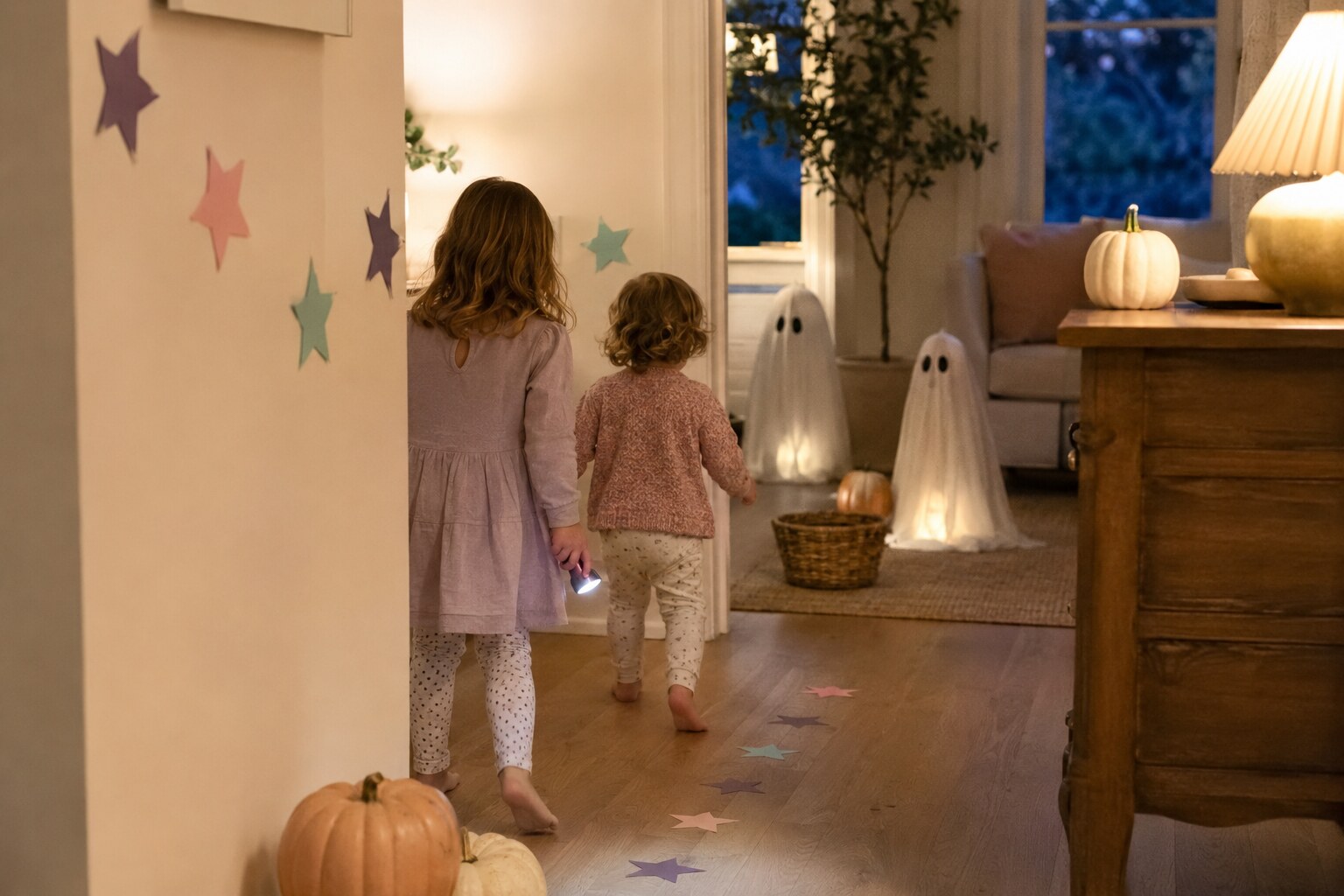
A Sweet Halloween Scavenger Hunt for Kids
This post contains affiliate links. If you purchase through one, Moments of Whimsy may earn a commission at no additional cost to you. As an Amazon Associate, Moments of Whimsy earns from qualifying purchases.
I have a very specific opinion about scavenger hunts for little kids: they should be much easier than the adults think they should be.
The fun is not watching a preschooler struggle with a clever riddle. The fun is watching her realize that the little paper star by the bookshelf is meant for her.
A Halloween scavenger hunt can turn an ordinary evening into a full story with almost no decorating. You need a safe route, six to ten clues, one flashlight moment and a simple reveal at the end.
Here is exactly how I would plan it.
Plan the ending first
Choose the final location before you write a single clue.
It should be somewhere safe, familiar and roomy enough for everyone to gather. A living-room rug, kitchen table or cozy reading corner works beautifully. Place one small woven basket, book, snack tray or friendly ghost there.
Once you know where the children are going, work backward through the house.
Your last clue leads to the reveal. The clue before that leads to the last clue. Continue until you reach the starting note.
Planning backward keeps the route from accidentally crossing itself or sending everyone up and down the same hallway four times.
Choose six good stops
For ages 3 to 5, six stops is plenty. For ages 6 to 8, use eight to ten if they are having fun with the clues.
Good indoor locations include:
- The bookshelf
- The coat hooks
- A favorite chair
- The bathroom sink
- The refrigerator
- A toy basket
- The child’s pillow
- The dining table
Avoid stairs, exterior doors, kitchens while food is cooking, pet areas, medicine cabinets and anything breakable.
Keep the route on one floor when you can. It feels just as magical and it is much easier to supervise.
Hide clues in view
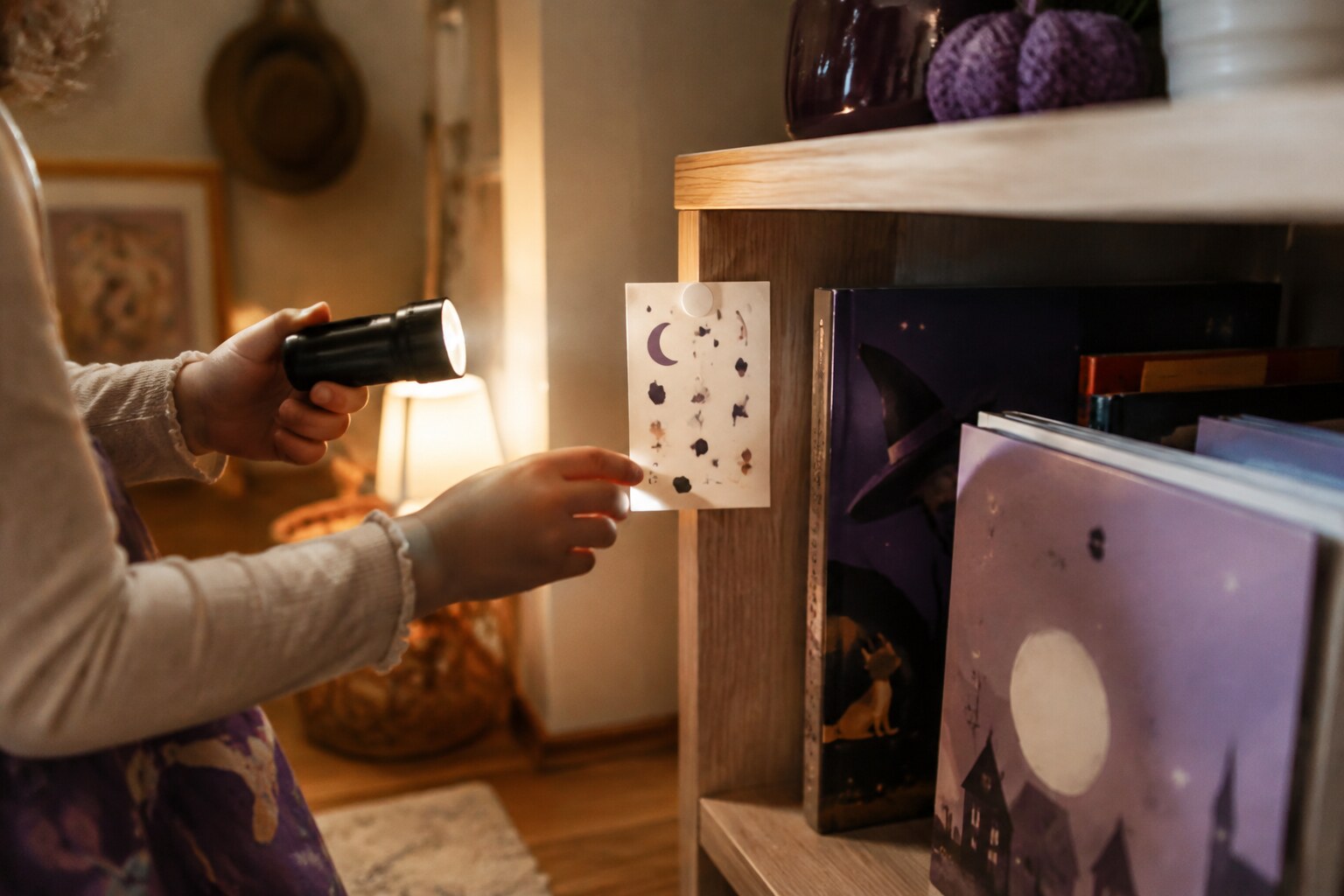
For preschoolers, let part of the clue peek out. Tape a paper star to the side of the bookshelf or place the envelope on top of a favorite stuffed animal.
They still get the joy of discovering it. You simply remove the part where everyone gets frustrated and starts pulling apart the sofa.
If you are attaching clues, removable adhesive dots are useful. Test them first on an inconspicuous area and keep every clue at child height.
Match the clue to the child
Picture clues work best for children who are not reading yet. Use a drawing or photo of the next location, then name it aloud together.
Early readers can handle one simple sentence:
“Look where your favorite stories sleep.”
“Find the place where we wash sleepy hands.”
“The next little star is waiting near something cold.”
Older children can solve a short riddle, but I would still keep it clear. This is a family night, not an entrance exam.
Give everyone a job
If more than one child is hunting, assign roles so the fastest child does not collect everything.
One child carries the clues. One carries the mini LED flashlight. One holds the paper stars. Switch jobs halfway through.
For a very young group, let everyone walk together and make the discovery as a team. Competition adds nothing here.
Use the flashlight without making the house dark
Children love getting their own small flashlight. You do not need to turn off every light to make it exciting.
Keep lamps on, light the route with warm flameless tea lights and let the flashlight add to the story. The children should always be able to see the floor, the adult and the way back.
If anyone feels worried, turn on more light immediately. Magic should feel safe.
Make one tiny detail repeat
Repeating one shape or color makes the entire hunt feel designed.
I love paper stars because they are easy to print or cut from heavy cream cardstock. You could also repeat a tiny ghost, moon, pumpkin or ribbon.
Use the same little symbol on the opening note, each clue and the final basket. Suddenly the whole evening feels connected, even if the rest of your house looks exactly like it did that morning.
End with connection, not more chaos
The reveal does not have to be candy.
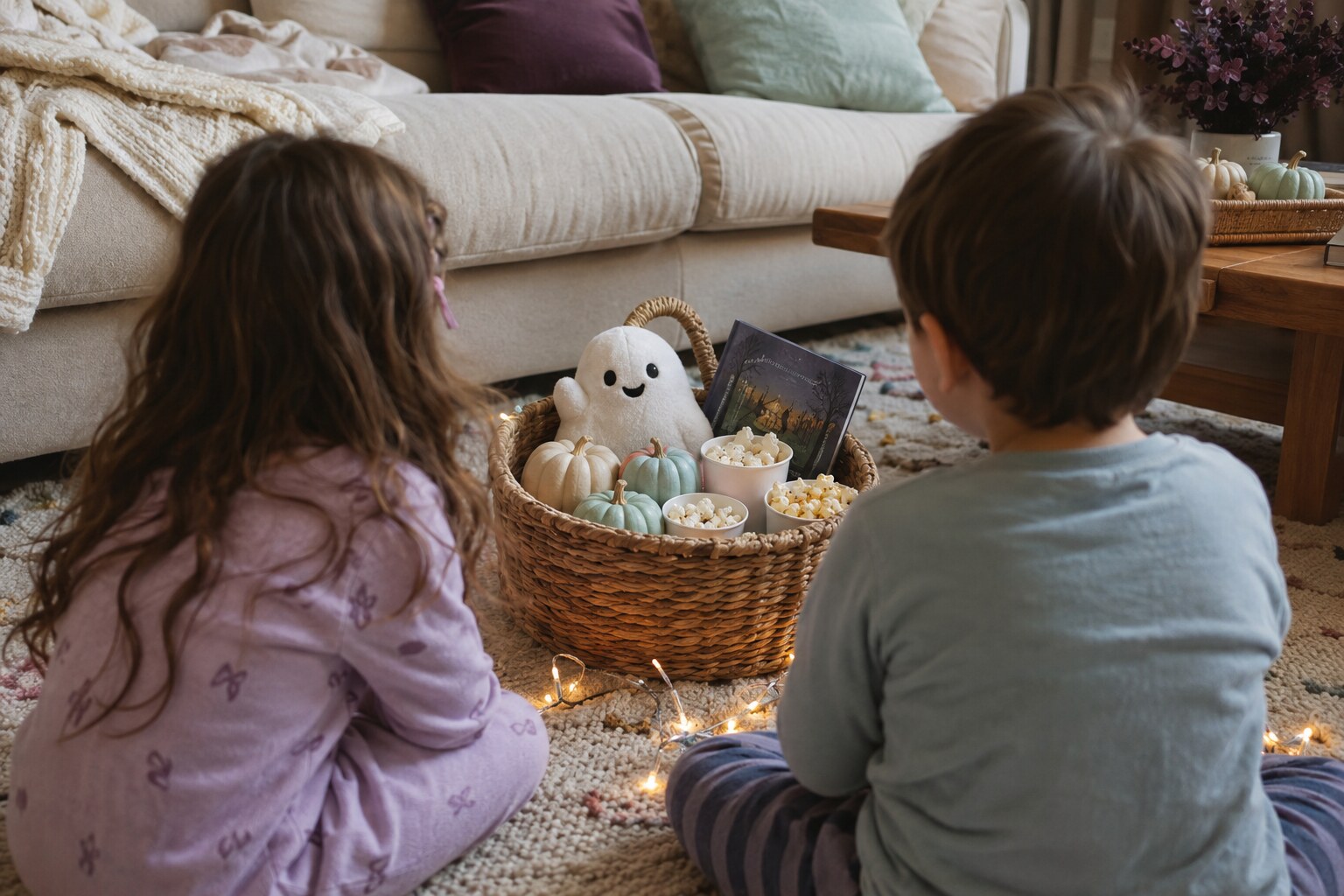
Try a Halloween picture book, cozy socks, a soft ghost plush, popcorn for a family movie or three little drink bottles for a potion bar.
After the reveal, sit down together. Ask which clue was easiest, which one surprised them and where they would hide a clue for you.
You just gave the story a beginning, middle and end. There is no need to add three more activities.
Want the clues and story done for you?
The Night the Little Ghosts Came includes a complete indoor clue hunt, an optional neighborhood observation route, picture clues for ages 3 to 5, written clues for ages 6 to 8, a grownup script, paper stars, passes, signs and the final reveal.
You print the pieces, choose the route that fits your home and begin.
Come join us
Join the Moments of Whimsy list for new family traditions, first access to seasonal releases and a free mini kit for your next little moment.
The best clue hunt is not the one with the smartest riddles. It is the one where every child gets to say, “I found it,” and every grownup is still having fun by the end.