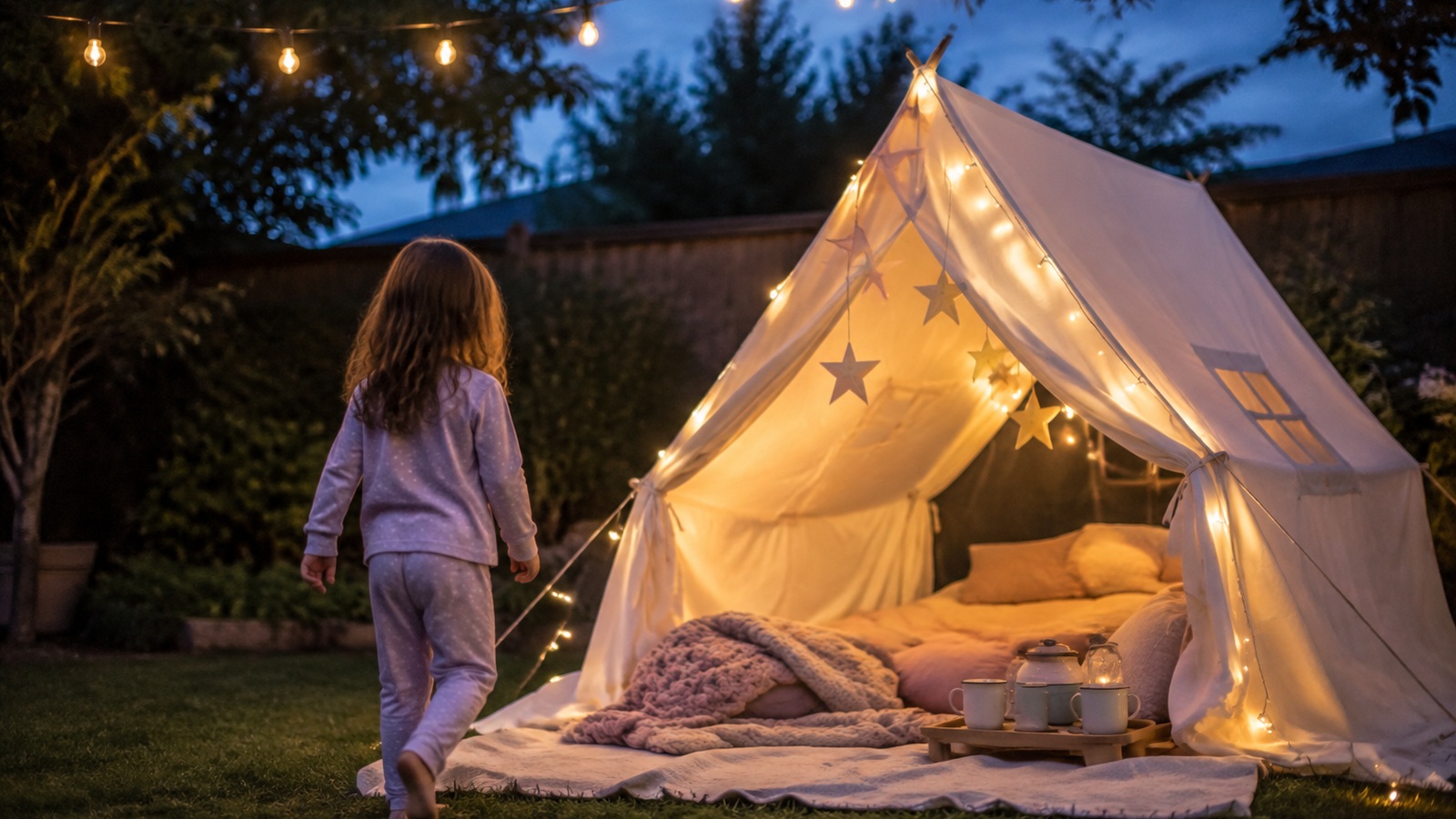
How to Plan a Backyard Campout for Kids Without Turning It Into a Huge Project
How to Plan a Backyard Campout for Kids Without Turning It Into a Huge Project
There is something wonderfully disproportionate about a backyard campout. To an adult, it is a tent a few steps from the kitchen. To a child, it is sleeping somewhere new, carrying a flashlight after dark and hearing the ordinary yard sound completely different.
The best part is that you do not need campground gear, a complicated menu or an entire weekend. A backyard campout for kids works because the setting changes. A few familiar things begin to feel special when they happen outside and slightly later than usual.
The easiest way to plan one is to decide what kind of night your family can actually enjoy before you start arranging pillows.
First, decide where everyone will sleep
This is the decision that keeps the campout from becoming stressful. There are three perfectly legitimate versions:
- Full backyard campout: The family does the activities and sleeps outside.
- Outdoor adventure, indoor sleep: Dinner, games and stories happen outside, then everyone carries a lantern indoors for bed.
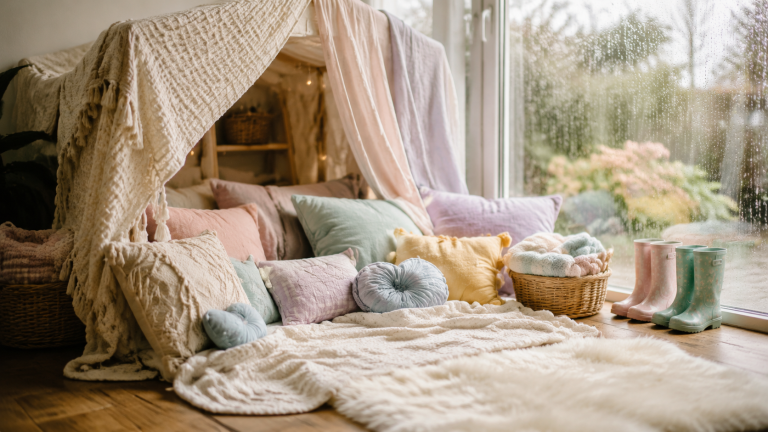
- Indoor campout: The tent or blanket fort moves into the living room because of weather, age or energy.
For children ages three to five, I would plan the outdoor activities and treat outside sleep as optional. A child who happily crawls into a glowing tent at 6:30 may feel very differently at 10:15. Moving inside does not mean the campout failed. It means the adults protected the feeling before it turned into a battle.
The five things that make a backyard feel like camp
1. One clear shelter
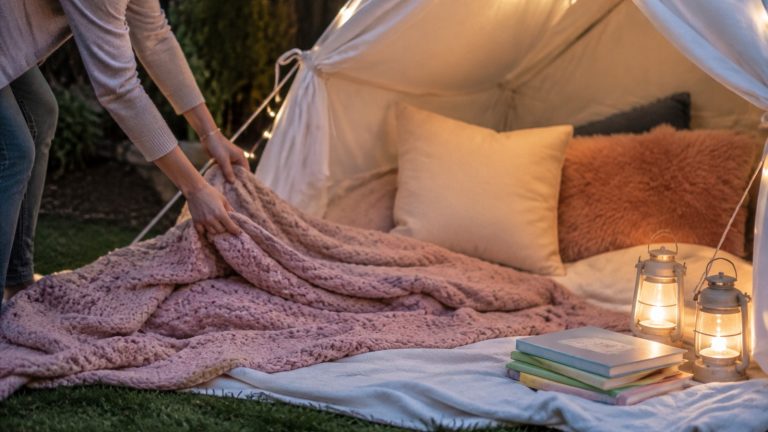
Use a regular camping tent, a play tent, a canopy or a sheet clipped over two chairs. The shelter only needs to create a visible place that did not exist that morning. Set it up while there is still daylight and keep the entrance wide and welcoming.
2. A comfortable ground layer
Put comfort before decoration. Start with a dry tarp, outdoor rug or waterproof picnic blanket. Add a sleeping pad, foldable floor mattress or familiar blankets. The prettier pillows will not help if everyone can feel the ground underneath them.
3. Warm battery light
A battery lantern or warm string lights instantly separate the camp area from the rest of the yard. Use battery-powered lights inside fabric shelters. Keep cords out of walking paths and keep open flames away from the tent.
4. One after-dark activity
The activity does not have to fill an hour. A flashlight scavenger hunt, shadow-puppet game or five-minute sky watch gives the children something they could not have done at the breakfast table.
5. A clear ending
End with one familiar story, one camp memory question or a simple announcement that camp is closing for the night. Children handle transitions better when the adults know what comes next.
The 30-minute backyard campout
If you want the experience without the overnight, this is the version I would use on an ordinary weeknight:
- Build a small tent or blanket shelter and add one lantern.
- Hand each child a flashlight and complete a short backyard hunt.
- Serve popcorn, fruit, cookies or simple s'mores ingredients on a tray.
- Read one story inside the tent.
- Take one photo, close camp and sleep inside.
That is enough to make the night feel different. The children will remember walking toward the lights and being allowed to explore the yard after dusk. They will not audit the number of planned activities.
If you want the full under-the-stars version
Start in the late afternoon so the tent and sleeping area are ready before everyone gets hungry. Serve an easy dinner outside, open camp with an official sign or job cards, complete one moving activity before dark, then shift into the flashlight hunt, snacks, stories and sleep.
Keep breakfast optional. If everyone wakes up cheerful, carry out waffles or cereal and complete a camp certificate. If the night was restless, go inside, make coffee and call the adventure complete.
What to do if it rains
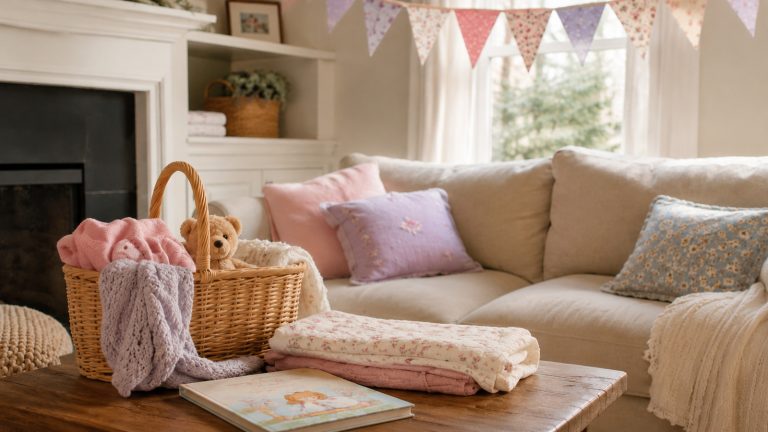
Move the shelter indoors before the reveal when the forecast is clearly poor. If rain begins after camp opens, let the children help carry the sign, lantern and story basket into the living room. Keep the same order of events so the experience still feels continuous.
The room can change. The ritual stays the same.
Want an activity you can use tonight? Download the free Backyard Night Hunt, a picture-based flashlight scavenger hunt made for younger campers.
Want the whole night planned for you? The Backyard Campout includes the complete experience guide, coordinated printables, menus, games, story prompts, camp jobs, photo plan, and weather backup.
Use what you own first. If a new piece would make the night easier, visit The Backyard Campout Sources.