When Should You Tell Young Kids About a Big Family Trip?
The best time to tell a young child about a family trip is late enough that the wait still feels understandable, but early enough that they have time to feel prepared. For many children ages 3 to 8, that means anywhere from a few days to a few weeks before departure, not months.
There is no single perfect date. The right window depends on the child’s age, sense of time, temperament, and how much the trip will change their usual routine.
A practical age-by-age starting point
Ages 3 to 4: one to three days before
Preschoolers live close to the present. “Next month” can feel as vague as “someday,” while a long countdown may create the same question every morning. A one-to-three-day window is often enough time to explain the plan, look at a few pictures, and pack a comfort item without stretching the anticipation too far.
Ages 5 to 6: three to ten days before
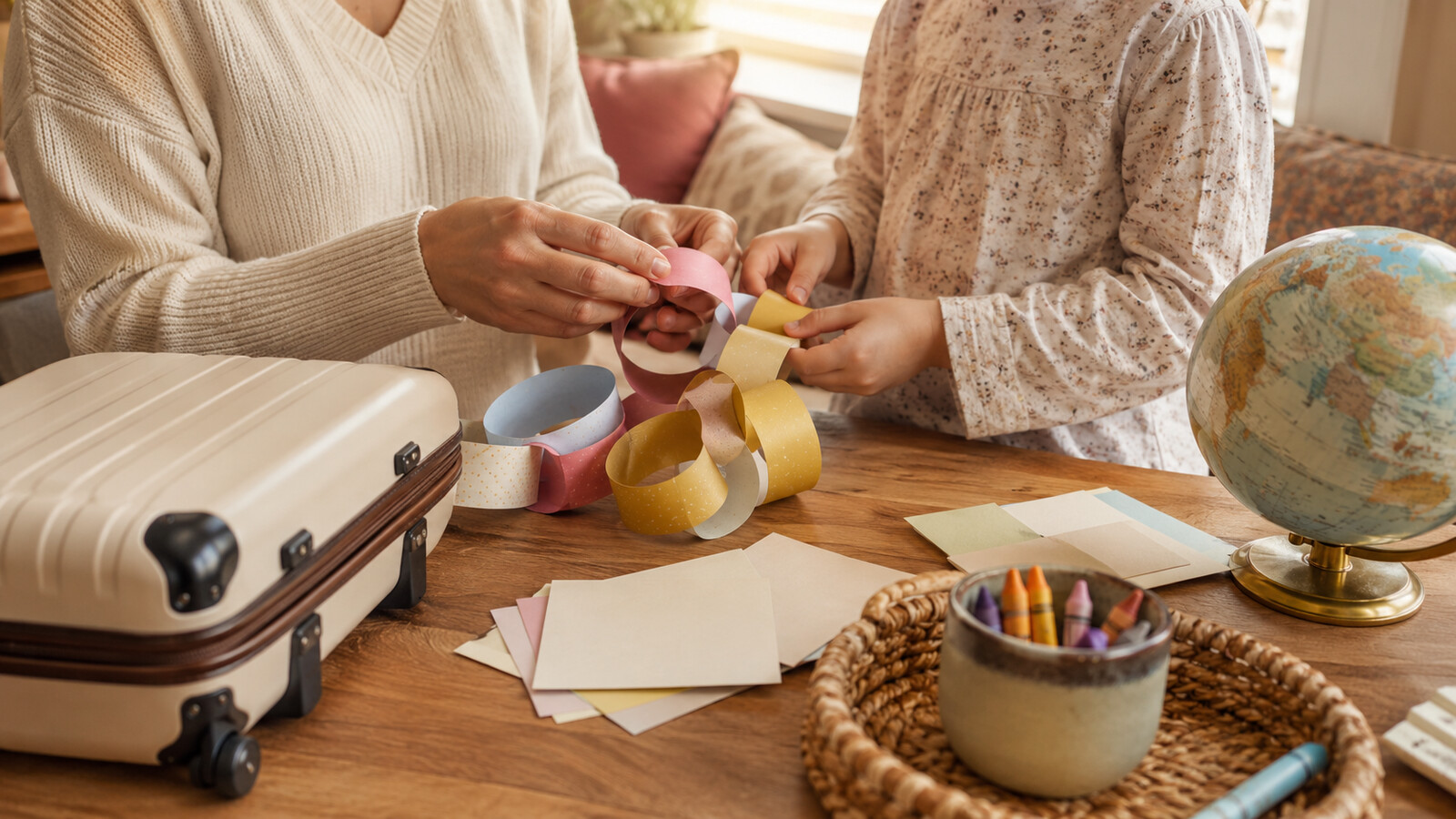
Children in this range are beginning to understand the week, especially when the trip connects to familiar markers such as “after two school days” or “this Saturday.” A short paper chain or picture calendar helps them see the wait rather than repeatedly asking how long it is.
Ages 7 to 8: one to three weeks before
Older elementary children can usually hold a longer countdown and may enjoy helping with choices. They can research one destination fact, choose a travel activity, make a packing list, or vote on a snack. Two or three weeks can feel exciting when there are a few meaningful ways to participate.
Tell them earlier when preparation matters
Some children need more lead time than their age alone suggests. Share the plan earlier if the trip includes a first flight, a long drive, a different sleeping arrangement, time away from a parent, a major schedule change, or sensory experiences that may feel unfamiliar.
An anxious child may do best with a calm reveal followed by clear, concrete information. Show where they will sleep, explain the travel steps, name who will be there, and identify which routines will stay the same. The reveal can still feel magical without withholding the details that help them feel secure.
Wait longer when anticipation becomes pressure
If your child asks the same question until the answer becomes stressful, wakes early when excited, struggles with transitions, or has trouble understanding future time, keep the waiting window short. A reveal the night before or the morning of departure can be completely special.
Waiting is not a test of patience. The goal is to give the child enough information to feel included, not to create weeks of emotional work for the whole household.
Use a countdown children can understand
Choose one visual unit and stick with it. For a trip in five days, make five paper links. For a trip after three sleeps, draw three simple moons. Remove one each day at the same time. Avoid combining weeks, days, and dates if the child is still learning how those ideas connect.
Each countdown step can include one tiny activity:
- Choose a comfort item for the trip.
- Pick one snack or travel game.
- Draw something you hope to see.
- Practice saying the destination name.
- Help place one item in a backpack.
What to say during the reveal
Start with the joyful news, then answer the four questions young children usually need: Where are we going? When are we leaving? Who is coming? How will we get there? Add one reassuring detail about sleep, food, or a familiar routine.
You might say, “We are going on a family adventure after three sleeps. We will drive together, you can bring your favorite blanket, and we are staying in a room with two beds.” That is concrete enough to feel safe and open enough to leave room for wonder.
Plan the reveal around your real calendar
Choose a time when you can stay present for ten or fifteen minutes after the news. Avoid revealing the trip right before school, bedtime, or another transition if excitement tends to make those moments harder. A weekend breakfast, quiet afternoon, or early evening often gives everyone space to enjoy the reaction and answer questions.
The Big Adventure Reveal includes a quick reveal, a fuller clue-based experience, age adaptations, countdown prompts, traveler jobs, and practical backup plans. The Big Adventure Reveal Shopping Guide collects optional helpers, but the core experience can be made with ordinary paper, envelopes, and a box you already have.
The right answer is the one that keeps joy comfortable
A reveal does not become more meaningful because the child waits longer. Tell them when the anticipation can still feel warm, the plan can be explained clearly, and you have enough room to share the moment together. That timing is different for every family, and that is exactly as it should be.